
Premier League players facing a long wait after missing the start of the season
The opening weeks of the 2026/27 Premier League season have already forced several managers to work around significant injuries. Some absentees are approaching a return, but others remain months away or have no confirmed comeback date.
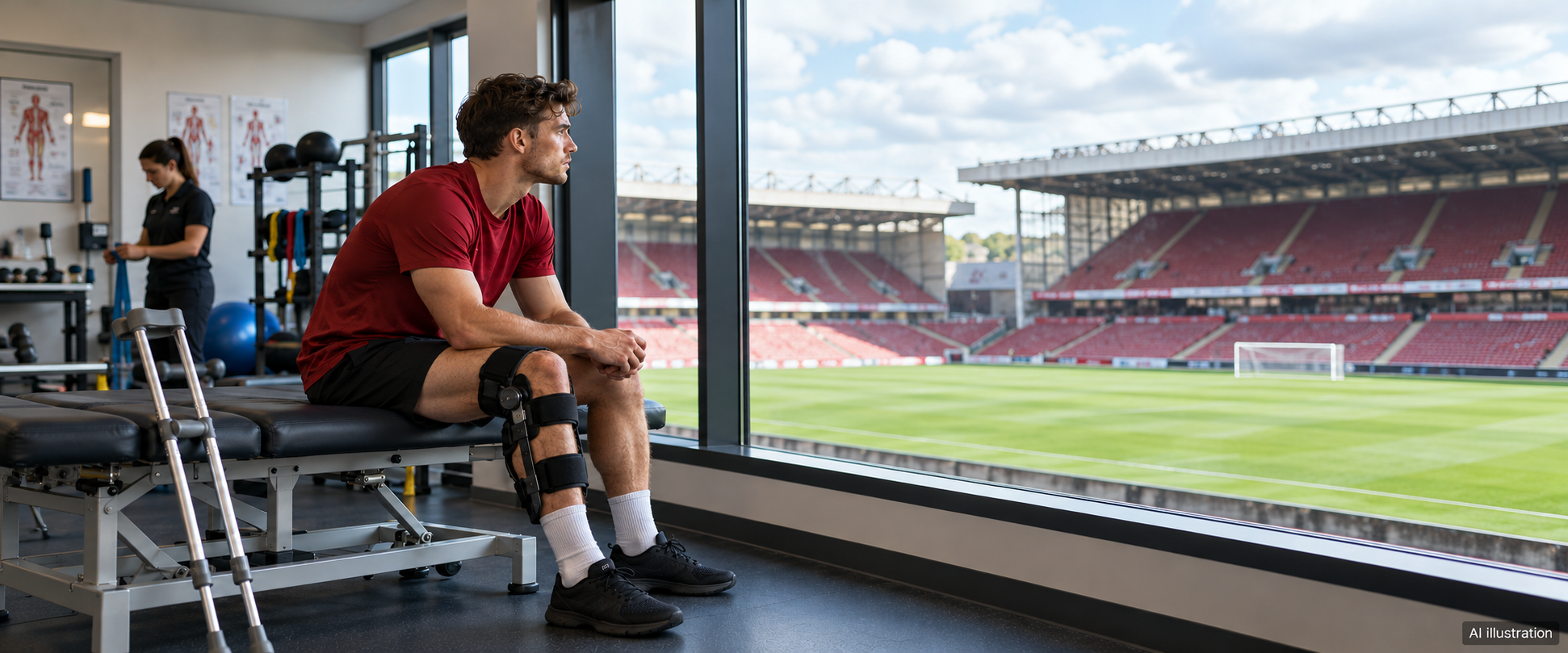
The opening weeks of the 2026/27 Premier League season have already forced several managers to work around significant injuries. Some absentees are approaching a return, but others remain months away or have no confirmed comeback date.
Liverpool and Manchester United have been hit particularly hard. Both clubs began the campaign without players who would normally provide important attacking or midfield options. Arsenal, Brighton and Crystal Palace are also managing injuries expected to affect several more fixtures.
Supporters now follow team news through club channels, football apps and entertainment platforms that may also include online slots, but the most useful updates usually arrive during managers’ press conferences. Estimated return dates can shift quickly, especially when a player is recovering after surgery.
Hugo Ekitike remains out after rupturing his Achilles
Hugo Ekitike is likely to be one of Liverpool’s longest absentees this season. The striker ruptured his Achilles tendon in April and did not recover in time for the beginning of the new Premier League campaign.
Liverpool have not announced a firm return date. Manager Andoni Iraola confirmed in early September that Ekitike would not be ready around the September international break and indicated that his recovery would continue considerably longer.
An Achilles rupture requires a carefully controlled rehabilitation process. Even when a player resumes running, further work is needed before he can sprint repeatedly, change direction and withstand contact in competitive matches. A return to team training will therefore be only one stage of Ekitike’s recovery.
His absence also affects how Liverpool manage their attacking options. The French forward can lead the line, press defenders and make runs behind the opposition. Without him, Iraola may need to use a different type of centre-forward or adjust the responsibilities of the players supporting the striker.
Liverpool are unlikely to set a public deadline until Ekitike reaches a more advanced stage of rehabilitation. The club’s official injury update continues to describe him as a long-term absentee.
Conor Bradley is still recovering after knee surgery
Conor Bradley has also missed Liverpool’s opening matches after undergoing surgery on the significant knee injury he suffered against Arsenal in January.
The right-back’s recovery is thought to be further advanced than Ekitike’s, but Liverpool have not provided an exact date for his return. Iraola suggested Bradley would remain unavailable beyond the September international break.
His absence leaves Liverpool with fewer natural options at right-back. Bradley offers energy on the overlap and can move into central areas when the team has possession. He is also capable of pressing high up the pitch, which suits an aggressive defensive approach.
A knee injury can make those movements difficult to restore. Straight-line running may begin relatively early, but repeated turns, tackles and accelerations require greater confidence in the joint. Match fitness presents another challenge after such a long absence.
Liverpool will be wary of increasing Bradley’s workload too quickly. Once he returns to training, he may need several weeks of carefully managed sessions and substitute appearances before he is considered ready to start regularly.
Manuel Ugarte could miss most of Manchester United’s season
Manuel Ugarte suffered a knee-ligament injury while representing Uruguay at the World Cup. Manchester United confirmed in July that the midfielder had undergone surgery and started his rehabilitation under the supervision of the club’s medical staff.
United have not disclosed the precise ligament involved or announced an expected return date. The lack of a public timeline, combined with the need for surgery, indicates that this is not an injury likely to resolve during the opening months of the campaign.
Reports have suggested that Ugarte could miss most of the season. Any return before its closing weeks would depend on how his knee responds during rehabilitation and whether he can complete each stage without a setback.
His absence removes a specialist ball-winning midfielder from Michael Carrick’s squad. Ugarte’s tackling and ability to pressure opponents can protect the defence, especially when United lose possession in advanced areas.
Carrick can use other central midfielders, but replacing Ugarte is not simply a matter of selecting another name in the same position. A more creative player may offer better passing but less defensive coverage. That can influence how high the full-backs move and how aggressively United press.
The priority will be a complete recovery rather than an early comeback. Knee-ligament injuries carry a substantial risk if a player returns before rebuilding strength and control around the joint.
Amad Diallo is unlikely to return before October
Amad Diallo’s absence is not expected to last as long as Ugarte’s, although Manchester United will still be without the winger for much of the early schedule.
Amad suffered an ankle injury during training in August and was initially expected to require around six weeks of rehabilitation. That places his possible return in October, assuming his recovery progresses without further problems.
The timing was particularly frustrating because the injury occurred shortly after the new season began. Amad had become an important attacking option through his ability to carry the ball, move between the wing and central positions, and create chances in crowded areas.
United can use Bryan Mbeumo on the right or provide opportunities for younger players. Neither solution offers an exact replacement. Mbeumo may be needed elsewhere in the attack, while an academy player would require time to adjust to the pace and physical demands of Premier League football.
Even if Amad resumes training in early October, he may not immediately start. Ankle injuries can restrict sharp changes of direction, which are central to his game. Carrick may initially use him as a substitute while his minutes are rebuilt.
William Saliba’s absence tests Arsenal’s defensive depth
William Saliba has missed part of Arsenal’s opening schedule with a back problem and is not expected to make an immediate return. Current estimates point towards a possible comeback later in the autumn, although Arsenal have avoided committing to a precise match.
Saliba is difficult to replace because of his recovery pace, strength in one-against-one situations and composure in possession. His presence allows Arsenal to defend higher up the pitch because he can cover space behind the defensive line.
Mikel Arteta has other centre-backs available, but injuries elsewhere in the squad have reduced his freedom to rotate. Cristhian Mosquera has also been assessed for a muscle problem, while Jurrien Timber has been managing his fitness.
Arsenal’s strong opening results have reduced the immediate pressure, yet the schedule becomes more demanding once domestic matches overlap with European competition. Saliba’s absence may force Arteta to limit rotation or use players outside their preferred positions.
Brighton must manage without Kaoru Mitoma
Kaoru Mitoma has not been available during Brighton’s early fixtures because of a thigh or hamstring problem. His return is currently expected in October, making him another established attacker who will miss more than a single round of matches.
Mitoma gives Brighton direct running on the left and can create chances by beating a defender rather than relying solely on passing combinations. Without him, the team may use a more conventional winger or ask a full-back to provide additional width.
Brighton have also been dealing with injuries to Mats Wieffer, Jack Hinshelwood and other members of the first-team squad. That makes Mitoma’s absence harder to absorb because the manager has fewer opportunities to reorganise the side elsewhere.
Players such as Bradley, Ekitike and Ugarte may be absent well beyond the next international break, while Amad, Saliba and Mitoma will still need to prove their fitness before returning to the starting line-up.