
How early injuries are already affecting the Premier League season
The 2026/27 Premier League season is only three matches old, yet several clubs are already adapting their starting line-ups around significant injuries. The problems are particularly noticeable at Arsenal, Chelsea, Liverpool and Manchester United, where absences affect the balance of the team rather than one isolated position.
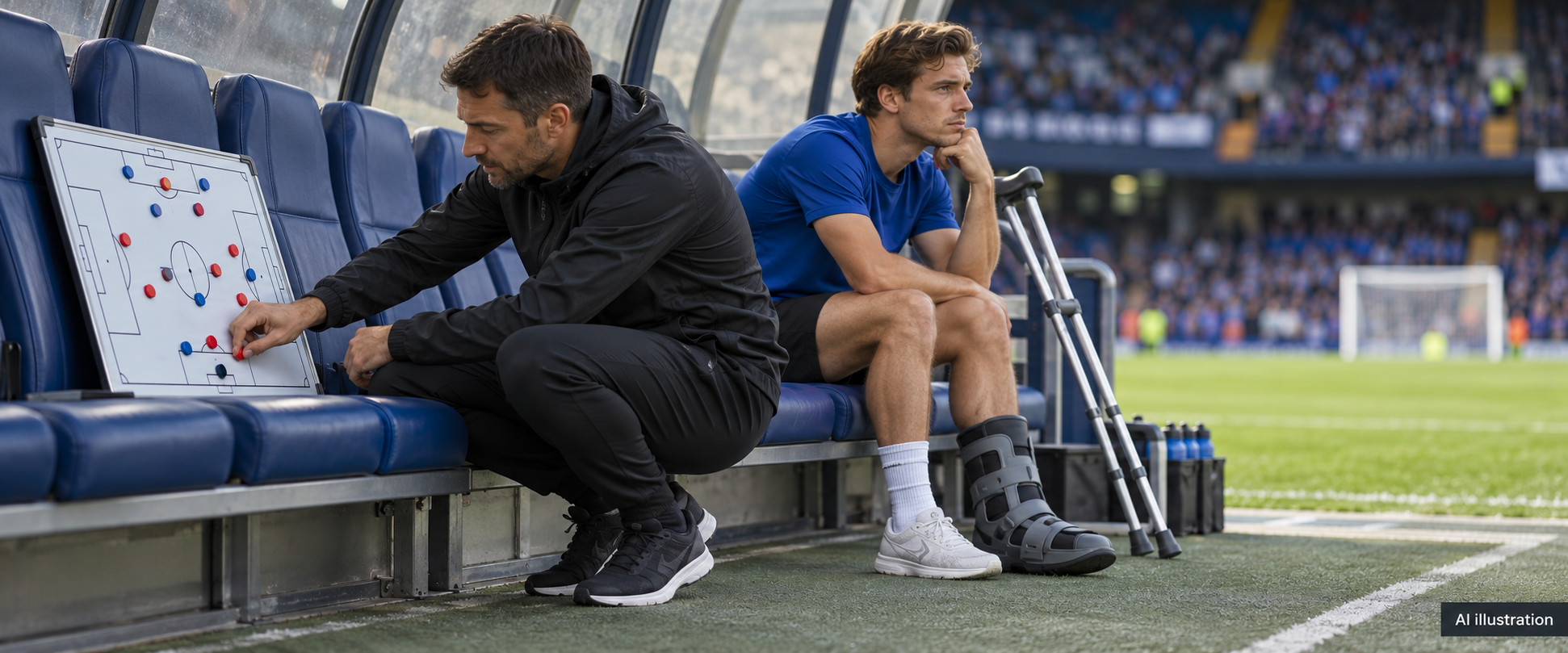
The 2026/27 Premier League season is only three matches old, yet several clubs are already adapting their starting line-ups around significant injuries. The problems are particularly noticeable at Arsenal, Chelsea, Liverpool and Manchester United, where absences affect the balance of the team rather than one isolated position.
Some injuries began last season, while others occurred during pre-season or the opening weeks of the new campaign. Liverpool remain without Hugo Ekitike after an Achilles rupture in April, and Arsenal defender William Saliba is recovering from a back problem.
These situations can quickly change expectations around an upcoming fixture. Supporters checking prices at betting sites should therefore look beyond the number of unavailable players and consider the role each one normally performs. Losing a first-choice midfielder may have a greater tactical effect than missing several squad players.
Return dates also need to be treated carefully. A player can resume individual training without being ready for a competitive start, while a substitute appearance does not necessarily mean that he is prepared to complete 90 minutes.
Why is William Saliba’s absence important for Arsenal?
Saliba has become central to the way Arsenal defend. His speed allows the team to hold a high line, while his composure helps Mikel Arteta’s side play through pressure near their own penalty area.
A back injury is expected to keep the French defender unavailable beyond the immediate schedule. Arsenal have enough depth to replace him, but changing the central defensive partnership can affect how aggressively the full-backs and midfielders move forward.
Cristhian Mosquera has also been assessed after suffering a muscle problem. He missed the 2-1 win over Chelsea, although the early indication was that the injury was not serious. Jurrien Timber has carried a separate fitness concern, creating further uncertainty around Arteta’s defensive options.
Arsenal have still won their opening three league matches. That record shows the strength of the squad, but the Champions League schedule will place additional demands on the available defenders. Rotation becomes harder when several players in the same area are injured or managing their fitness.
Chelsea are missing control in midfield
Moisés Caicedo’s injury has created a different problem for Chelsea. The Ecuador international missed the opening two matches before returning as a substitute against Brighton.
His comeback lasted only 13 minutes. Caicedo felt discomfort and was removed, with Xabi Alonso later confirming that it was connected to the existing issue rather than a completely new injury. He then missed the defeat at Arsenal.
Caicedo’s influence extends beyond tackles and interceptions. He protects the central defenders, helps Chelsea recover possession and gives attacking players greater freedom to move ahead of the ball.
Roméo Lavia is still working towards full match fitness, while Enzo Fernández left for Manchester City near the end of the transfer window. Alonso has fewer established options for the deeper midfield positions and may need to adjust his structure until Caicedo is ready.
The problem can also affect Chelsea’s defenders. Without a specialist midfielder closing spaces in front of them, the back line may face more direct attacks and second balls. Caicedo’s absence therefore changes the assessment of the whole team rather than one place in the starting XI.
How serious are Liverpool’s attacking injuries?
Liverpool have started the season with Alexander Isak in strong form, but their attacking depth remains reduced by Ekitike’s long-term absence. The French forward ruptured his Achilles in April and has not been given a confirmed return date.
Andoni Iraola has indicated that Ekitike will remain unavailable beyond the September and October international break. An Achilles injury normally requires a cautious rehabilitation, especially for a forward who depends on acceleration and sharp changes of direction.
Liverpool also have several defensive absences. Conor Bradley underwent knee surgery after being injured against Arsenal in January, while Giovanni Leoni has been out since September 2025 following an anterior cruciate ligament injury.
Federico Chiesa is expected to return to team training later in September after a pre-season problem. Joe Gomez is closer to rejoining the group following a muscle injury, but rebuilding training intensity may delay his return to the starting line-up.
The immediate concern is not Liverpool’s strongest eleven. It is their ability to rotate once league, European and domestic cup matches begin arriving in quick succession.
Manchester United’s midfield options remain limited
Manchester United are managing several absences before the Manchester derby. Manuel Ugarte faces a long recovery following a serious knee injury, removing one of Michael Carrick’s defensive midfield options.
Summer signing Carlos Baleba has also been recovering from an ankle problem. His absence has prevented Carrick from immediately integrating him into a midfield that has already shown defensive weaknesses.
United conceded twice during the 5-2 victory over Ipswich and another two goals in the draw at Everton. Injuries do not explain every defensive error, but losing midfielders who can press, cover ground and protect transitions makes the structure harder to maintain.
Amad Diallo remains unavailable with an ankle or foot injury, while Matthijs de Ligt is rebuilding his fitness after a longer absence. Luke Shaw and Mason Mount have returned to training, giving Carrick some better news before the schedule becomes busier.
The main risk comes late in matches. Carrick has fewer experienced options when he needs to replace tiring players, and changes can disturb the organisation of the team. Everton’s late pressure exposed that problem during the 2-2 draw.
Manchester City have more room to adapt
Manchester City have also lost players, but their squad currently appears better equipped to absorb the disruption. Jérémy Doku has been sidelined by a calf problem, and Nico O’Reilly injured his back during the warm-up before the 1-0 win over Coventry.
O’Reilly’s withdrawal led to an unexpected debut for Enzo Fernández. The midfielder helped create Haaland’s winning goal, demonstrating the value of having experienced replacements available.
City can cover Doku’s absence with Iliman Ndiaye, Antoine Semenyo, Phil Foden or Rayan Cherki. Those players do not offer identical qualities, but Enzo Maresca can change the role without redesigning the entire attack.
The larger concern is workload. City have Champions League matches alongside their domestic programme, while several senior players were involved in the summer World Cup. A minor injury can become more serious if a replacement is asked to play every match during a congested period.
Which other injuries could affect the coming weeks?
Brighton remain without Kaoru Mitoma and Mats Wieffer. Mitoma’s absence removes a direct winger capable of carrying the ball and creating chances, while Wieffer’s injury affects the structure of the midfield.
Crystal Palace have played without Jean-Philippe Mateta because of a hamstring problem. Ismaïla Sarr has also been working towards a return, leaving Palace with fewer established attacking options during the opening matches.
Leeds United defender Joe Rodon is expected to miss several weeks with a hamstring injury. His absence matters to a promoted side that needs consistency and communication at the back while adjusting to Premier League speed.
These cases show why an injury list needs context. Clubs rarely replace one player with an exact equivalent. Managers change partnerships, move players into unfamiliar roles or alter their tactical approach.
The early league table may suggest that some teams have handled those changes successfully. The harder test begins as European football and cup competitions reduce the time available for training and recovery. Squad depth will become increasingly important long before the busiest winter period arrives.